What Is Thyroid Radiofrequency Ablation (RFA)?
A proven, non-surgical approach to treating thyroid nodules — how it works, the science behind it, and what the evidence says.
Shrink Your Thyroid Nodule — Without Going Under the Knife
Thyroid RFA uses a thin needle and controlled heat to reduce the size of thyroid nodules — preserving your thyroid gland, your function, and your quality of life.
Thyroid nodules are common — roughly half of adults have them by the time they reach 60. Most are benign, but some grow large enough to cause a visible lump, pressure on the throat, difficulty swallowing, or breathing changes. Others cause overactive thyroid function (hyperthyroidism). Historically, the main treatment options were surgery or lifelong surveillance.
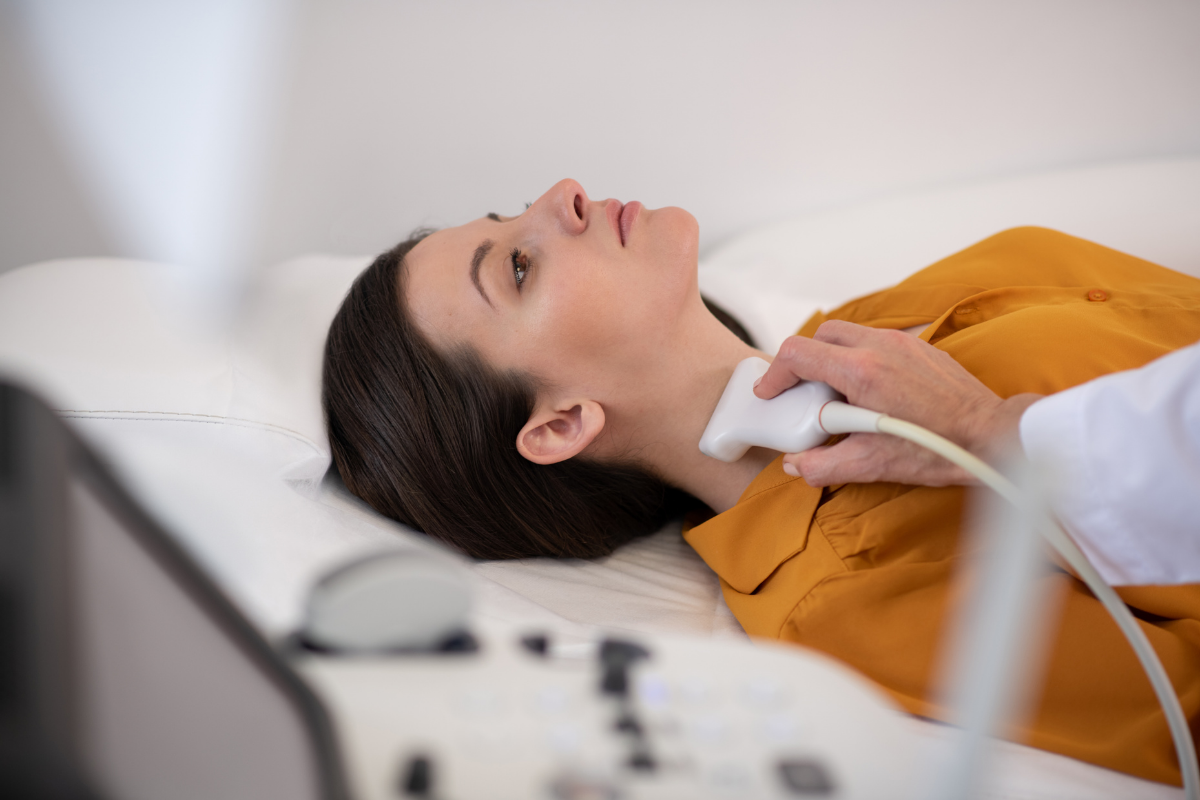
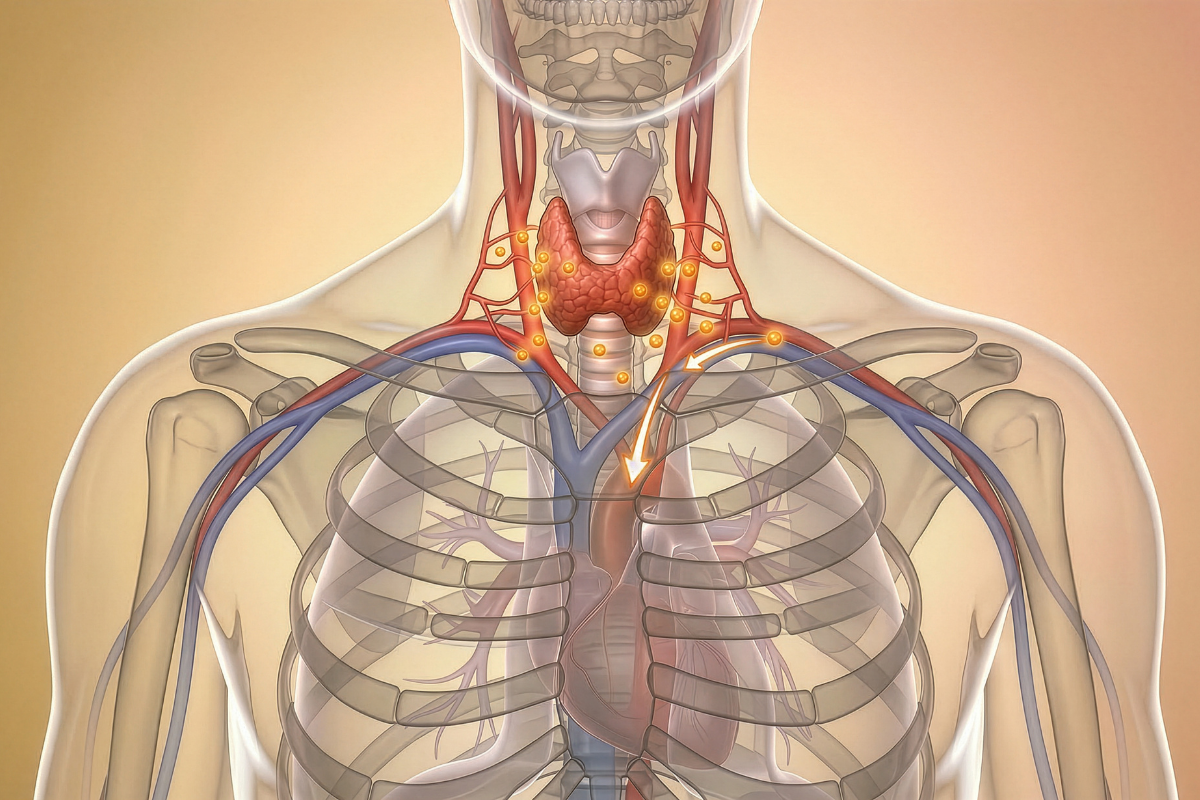
Radiofrequency ablation (RFA) changes that equation. By delivering precise heat energy directly into the nodule through a thin needle — guided in real time by ultrasound — RFA disrupts the nodule tissue and causes it to progressively shrink over the following weeks and months. The surrounding healthy thyroid tissue is spared.
The result: significant, durable nodule reduction — without a single incision, without general anesthesia, and without removing your thyroid.
By the Numbers
Dr. Parikh has performed over 500 thyroid RFA procedures — among the highest volumes in the United States — with zero major complications across all procedures and over 6 years of RFA experience.
How Does Thyroid RFA Work?
The procedure is precise, safe, and guided by real-time imaging at every step.
-
1
Ultrasound Mapping
Before and throughout the procedure, high-resolution ultrasound imaging is used to precisely map the nodule, identify its relationship to nearby structures (blood vessels, nerves, trachea, esophagus), and guide the needle placement in real time.
-
2
Local Anesthesia & Hydrodissection
The neck is numbed with local anesthetic. A technique called hydrodissection — injecting a small amount of fluid around the nodule — creates a protective barrier between the nodule and adjacent critical structures before the procedure begins.
-
3
Needle Probe Insertion
A thin, specialized RFA electrode needle is inserted through the skin into the thyroid nodule under continuous ultrasound guidance. No incision is made — the needle is thinner than those used for many injections.
-
4
The Moving-Shot Technique
Radiofrequency energy is delivered in a controlled pattern as the needle is methodically moved through the nodule — treating it in overlapping sections. This gold-standard technique ensures uniform, thorough ablation of the entire nodule without missing areas or overtreating healthy tissue.
-
5
Progressive Nodule Shrinkage
The treated tissue is gradually reabsorbed by the body over the following weeks and months. Most patients see measurable shrinkage within the first few weeks. The nodule typically reaches 50–80% volume reduction within 12 months.
Why the Moving-Shot Technique Matters
Older techniques treated only the center of a nodule, leaving the edges undertreated. The moving-shot technique, which Dr. Parikh uses exclusively, systematically treats the entire nodule including its margins — maximizing shrinkage and reducing the need for repeat treatments.
What the Research Says About Thyroid RFA
RFA is not experimental. It is backed by over a decade of robust clinical data from peer-reviewed studies worldwide.
Consistent Volume Reduction
Multiple large studies demonstrate 50–80% nodule volume reduction at 12 months, with continued reduction in many patients at 24+ months. Long-term follow-up studies show durable results.
Excellent Safety Profile
Large registry studies from South Korea and Europe, involving thousands of patients, report major complication rates below 1%. Dr. Parikh's own record: zero major complications in over 500 procedures.
Preserved Thyroid Function
Because only the nodule is treated, thyroid hormone production is unaffected in most patients. Studies consistently show no significant change in thyroid function tests after RFA.
Symptom Relief
Clinical studies document significant improvement in neck discomfort, swallowing symptoms, and pressure — as well as cosmetic improvement — following nodule reduction with RFA.
Effective for Toxic Nodules
For autonomously functioning (toxic) thyroid nodules causing hyperthyroidism, studies show RFA normalizes thyroid hormone levels in the majority of patients, reducing or eliminating the need for anti-thyroid medication.
Supported by International Guidelines
RFA for thyroid nodules is endorsed in clinical practice guidelines by the Korean Society of Thyroid Radiology, the European Thyroid Association, and is recognized by the American Thyroid Association in its consensus statements.
A Note on Evidence Quality
Most of the foundational clinical data on thyroid RFA comes from South Korea, where the technique was pioneered and widely adopted over a decade ago. European and North American data are now expanding. Dr. Parikh trained directly with a pioneer of the procedure to ensure his technique reflects the best available evidence and training.
RFA for Different Types of Thyroid Nodules
Solid Benign Nodules
The most common RFA indication. Solid benign nodules with confirmed benign biopsy results respond very well to RFA, with high rates of sustained volume reduction. Two prior benign biopsies are ideal before proceeding.
Cystic & Complex Nodules
Cystic (fluid-filled) nodules can often be drained first, then treated with RFA to prevent recurrence. Complex nodules with both solid and cystic components also respond well and are commonly treated.
Toxic (Autonomously Functioning) Nodules
RFA has demonstrated effectiveness in normalizing thyroid hormone levels in patients with autonomously functioning nodules causing hyperthyroidism — offering an alternative to radioactive iodine or surgery.
Low-Risk Thyroid Cancer (Select Cases)
For carefully selected patients with small, low-risk papillary thyroid cancers who are not surgical candidates or who refuse surgery, RFA may be considered as part of an active surveillance approach. Dr. Parikh evaluates these cases individually.
What Happens During the Procedure?
Before You Arrive
You'll have had a consultation with Dr. Parikh to review your ultrasound and biopsy results. You'll be given instructions about what to eat and drink before the procedure and which medications to hold.
Arrival & Preparation
You'll arrive at our Atlanta office. After check-in, you'll be positioned comfortably on the procedure table with your neck extended.
Local Anesthesia
The neck area is cleaned and numbed with local anesthetic injections. Most patients report minimal discomfort during and after the procedure — comparable to a dental procedure with adequate numbing.
The Ablation
Dr. Parikh inserts the RFA electrode needle through the skin under continuous ultrasound guidance. Using the moving-shot technique, he methodically treats the nodule section by section. You may feel some warmth or mild discomfort during energy delivery; staff will monitor your comfort throughout.
After the Procedure
You'll rest briefly in the office — typically 15–30 minutes. Most patients go home the same day. You'll be given post-procedure instructions and a follow-up appointment for ultrasound at 1 month. Over-the-counter pain medication is typically all that's needed for any discomfort.
Procedure Duration
Most procedures take approximately 45 minutes, though treatment of larger or more complex nodules may take longer.
Quick Facts
- Setting: in-office (no hospital)
- Anesthesia: local anesthesia
- Duration: ~45 minutes
- Incision: none
- Recovery: back to normal within 1–2 days
- Thyroid preserved: yes
- Medication needed after: typically no
Learn Whether RFA Is Right for Your Nodule
Schedule a consultation with Dr. Parikh. He'll review your specific nodule — its size, type, biopsy results, and symptoms — and give you his honest recommendation.