Shrink Your Thyroid Nodule — Without Surgery
Radiofrequency ablation (RFA) is a non-surgical, in-office procedure that reduces thyroid nodules using gentle heat energy — no incision, no scar, no general anesthesia, and no thyroid medication afterward.
Dr. Shatul L. Parikh, M.D., FACS brings a surgeon's precision to every RFA case. With over 500 procedures performed, 6+ years of RFA experience, and zero major complications, he is one of the most experienced thyroid RFA specialists in the country.
Unmatched Experience in Thyroid RFA — and the Surgical Expertise to Back It Up
Most RFA providers are trained only in the non-surgical procedure. Dr. Parikh is different: he is both a nationally recognized thyroid surgeon and one of the country's most experienced RFA specialists — which means he can truly offer you the right treatment, not just the one he performs.
500+ RFA Procedures — Among the Highest Volumes in the U.S.
Volume matters in medicine. Dr. Parikh has performed over 500 thyroid RFA procedures — more than nearly any other specialist in the country — with zero major complications across all procedures.
6+ Years of RFA Experience
Dr. Parikh has been performing thyroid RFA for over six years — longer than most practitioners in America. He was an early adopter of this technology and has refined his technique through hundreds of cases.
Trained by a World-Renowned RFA Pioneer
Dr. Parikh trained in thyroid RFA under a world-renowned pioneer of the technique from Brazil — one of the leading experts in the world. His training ensures best-in-class technique and patient outcomes.
A Surgeon Who Can Offer Both — With No Bias
Because Dr. Parikh performs both RFA and thyroid surgery, he has no financial incentive to push you toward one option. He will honestly evaluate whether RFA, surgery, or watchful waiting is right for your nodule.
One of the Country's Highest Thyroid Surgery Volumes
Dr. Parikh has one of the highest overall thyroid and parathyroid surgery volumes in the country. When surgery is needed, you're in the hands of an expert. That same precision applies to every RFA he performs.
Patients Travel from Across the Country
Because of his expertise and outcome record, patients fly in from states across the U.S. to be treated by Dr. Parikh. We have streamlined the process for out-of-town patients to make your trip as efficient as possible.
What Is Thyroid Radiofrequency Ablation?
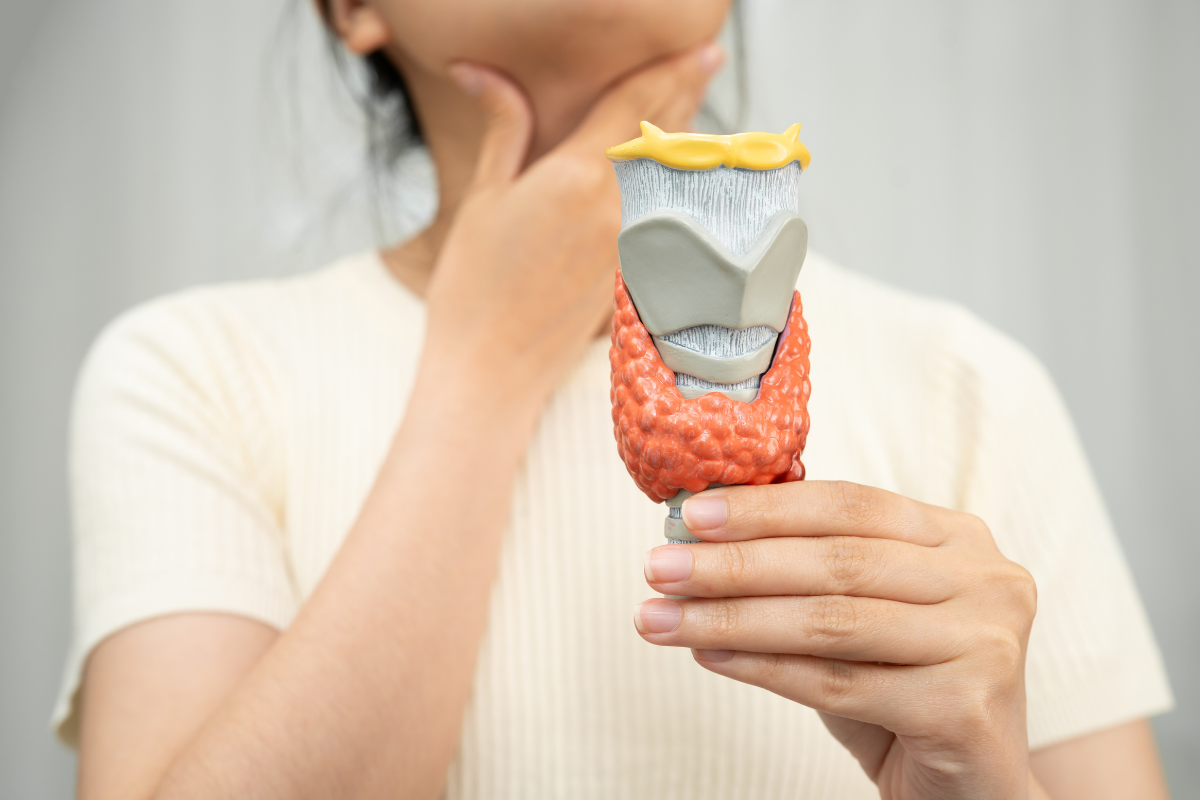
A non-surgical, in-office treatment that shrinks thyroid nodules using controlled heat energy — while leaving your thyroid intact.
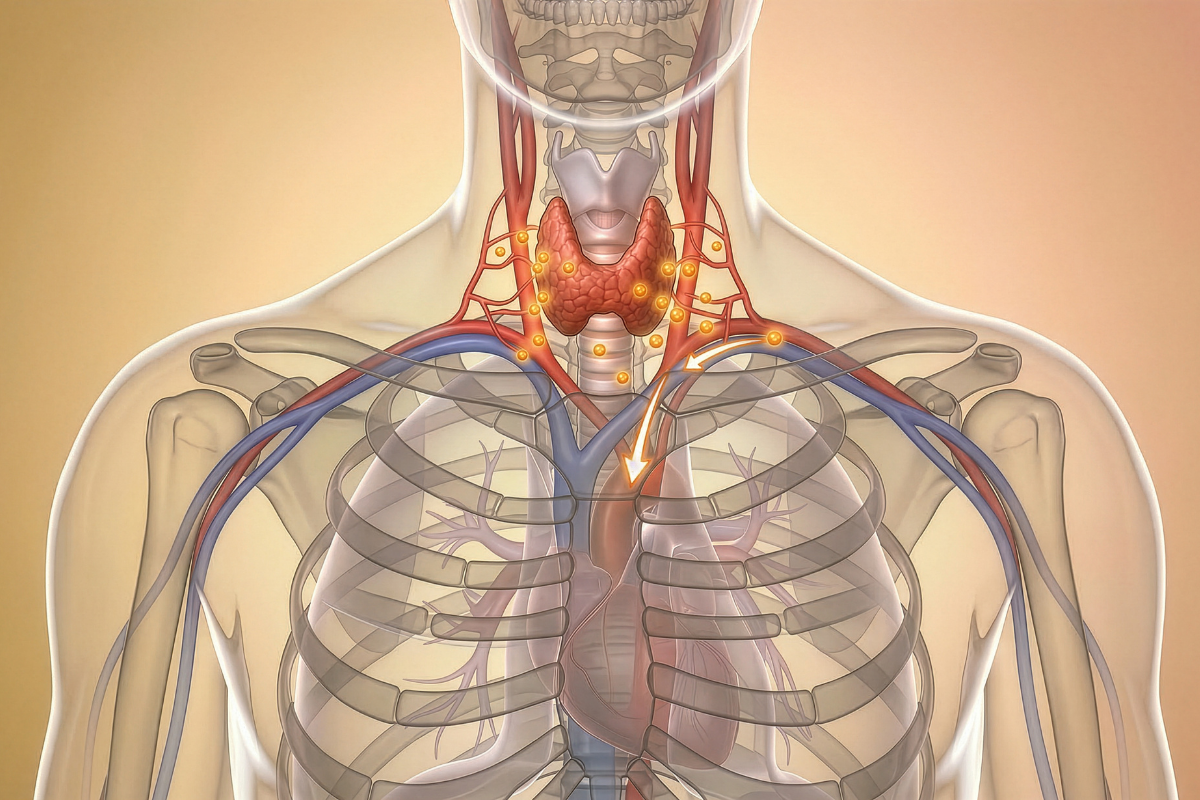
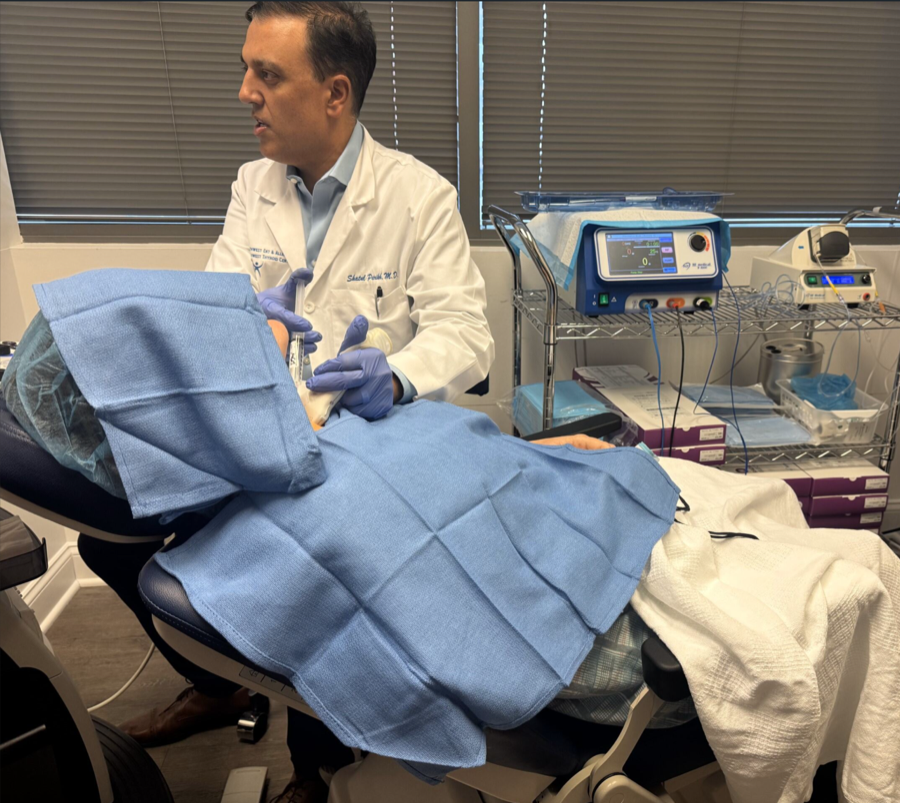
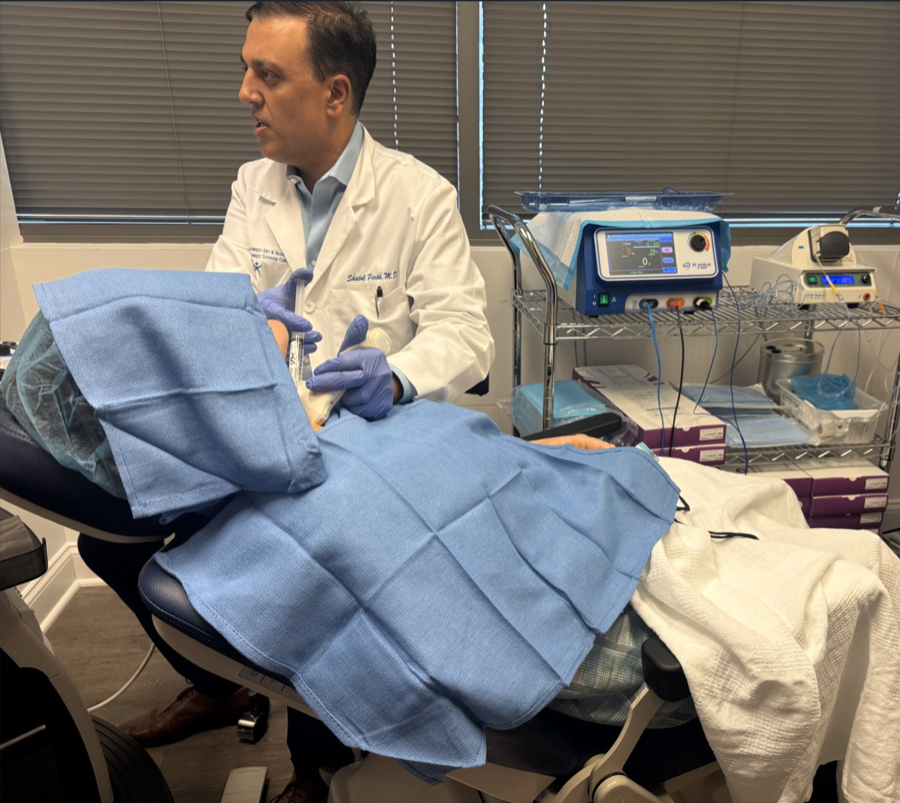
Radiofrequency ablation (RFA) uses a thin needle probe guided by real-time ultrasound to deliver precise heat energy directly into a thyroid nodule. The heat disrupts the nodule's cells, causing it to gradually shrink over the following weeks and months — while leaving the rest of your thyroid tissue untouched and functional.
The procedure takes approximately 45 minutes. It is performed in our office under local anesthesia. There is no incision, no visible scar, and no general anesthesia. Most patients return to normal activity the following day.
RFA has been used in medicine for decades and has been applied to thyroid nodules with excellent results, supported by robust clinical data from studies across the U.S., South Korea, Europe, and beyond.
The Moving-Shot Technique
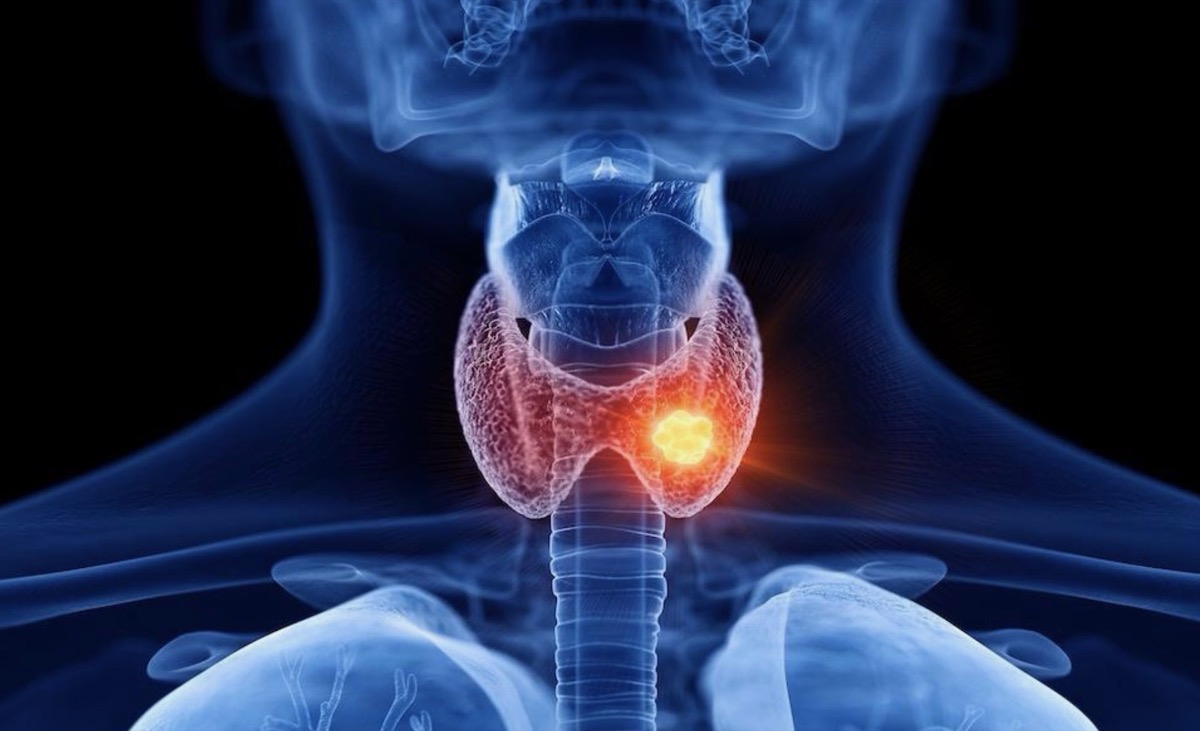
Dr. Parikh uses the moving-shot technique — the gold-standard method for thyroid RFA — which ensures thorough, uniform treatment of the entire nodule while precisely sparing the surrounding healthy thyroid tissue.
Results You Can Count On
Dr. Parikh's outcomes speak for themselves.
Is Thyroid RFA Right for You?
RFA is an excellent option for many patients — but not every nodule is a candidate. Dr. Parikh performs a thorough evaluation before recommending any treatment.
Common RFA Candidates
- Benign thyroid nodules causing a visible lump in the neck
- Nodules causing difficulty swallowing, breathing, or pressure
- "Toxic" or overactive nodules causing hyperthyroidism symptoms
- Patients who want to avoid thyroid surgery and lifelong medication
- Nodules with benign biopsy results that continue to grow
- Nodules causing cosmetic concerns
- Select small, low-risk thyroid cancers (evaluated case by case)
Not Every Nodule Qualifies
Nodules near critical structures, those with indeterminate or suspicious biopsy results, or large complex goiters may require a different approach — including surgery. Because Dr. Parikh performs both RFA and surgery, he can offer the right recommendation regardless of the answer.
What to Expect: Before, During, and After
From your first call to your follow-up ultrasound, here is exactly what the RFA process looks like with Dr. Parikh.
-
1
Consultation & Ultrasound Review
Dr. Parikh reviews your history, examines your neck, and reviews or performs a thyroid ultrasound. He discusses your biopsy results and recommends a treatment plan. No pressure — just his honest assessment.
-
2
Biopsy Confirmation (if needed)
Most candidates will have had one or two prior fine needle aspiration (FNA) biopsies confirming the nodule is benign. If not, Dr. Parikh will typically recommend biopsy before proceeding with RFA.
-
3
Procedure Day
You arrive at our Atlanta office. Local anesthetic is applied to the neck. Dr. Parikh inserts the needle probe under ultrasound guidance and treats the nodule using the moving-shot technique. The procedure takes approximately 45 minutes.
-
4
Recovery (Same Day)
You rest briefly in our office, then go home. Over-the-counter pain medication is typically sufficient. Most patients return to normal activity the next day. No hospital stay required.
-
5
Follow-Up Ultrasound
Ultrasound follow-up is scheduled at 1, 6, and 12 months to measure nodule shrinkage. Most patients see 50–80% volume reduction over 12 months. Some large nodules may benefit from a second treatment after 6+ months.
RFA vs. Thyroid Surgery: At a Glance
Both options have their place. Dr. Parikh is equally expert in both and will guide you to the right choice for your specific situation.
| Thyroid RFA | Thyroid Surgery | |
|---|---|---|
| Incision | None — no scar | 1–2 inch neck incision |
| Anesthesia | Local anesthesia | General anesthesia |
| Setting | In-office procedure | Hospital or surgery center |
| Recovery time | 1–2 days | 1–2 weeks |
| Thyroid preserved? | Yes — gland remains intact | Partial or full removal |
| Medication after? | Usually not required | Often lifelong thyroid medication |
| Insurance coverage | Covered by insurance (CPT 60661) | Typically covered |
| Best suited for | Benign/low-risk nodules, toxic nodules | Cancer, suspicious nodules, large goiters |
What Patients Say
"I had RFA for my thyroid nodule in October and I couldn't be happier. Dr. Parikh and his staff explained every step of the procedure and put me completely at ease. I was awake the whole time, home the same day, and back to normal within a day or two. No surgery, no scar, no hospital stay. No words can express my gratitude — thank you Dr. Parikh and team!"
"I was dreading surgery when I found out about my thyroid nodule, but Dr. Parikh said I was a great candidate for RFA. The procedure took about an hour, was virtually painless, and I was back to work the next day. A few months later my nodule had shrunk dramatically. Dr. Parikh is the best — professional, friendly, and incredibly knowledgeable."
"My thyroid nodule was causing real pressure and difficulty swallowing. Dr. Parikh recommended RFA and the results have been incredible — the nodule shrank significantly and all my symptoms are gone. I'm so relieved I didn't need surgery. He is thorough, honest, and truly one of the best. I can't recommend him enough."
Your Questions About Thyroid RFA, Answered
Thyroid radiofrequency ablation (RFA) is a minimally invasive, non-surgical procedure that uses heat energy delivered through a thin needle to shrink thyroid nodules. It is performed in the office under local anesthesia, takes about 45 minutes, and requires no incision or general anesthesia. The needle is guided by real-time ultrasound throughout the procedure.
Good candidates include patients with benign thyroid nodules that are growing, causing symptoms such as pressure, difficulty swallowing, or a visible lump, or causing cosmetic concerns. Patients with overactive (toxic) nodules are also strong candidates. A thorough evaluation including ultrasound review and prior biopsy results is required before proceeding.
RFA significantly shrinks nodules — most patients see 50–80% volume reduction over 12 months. The nodule is not completely eliminated but becomes much smaller and less symptomatic. Some nodules may slowly regrow over years and may benefit from a second treatment. Long-term data shows durable results for the majority of patients.
In most cases, no. Unlike surgical removal of the thyroid, RFA preserves the thyroid gland and its function. Most patients do not require thyroid replacement medication after the procedure. This is one of the key advantages of RFA over surgery for benign nodules.
Yes — thyroid RFA is covered by insurance. It has a dedicated CPT billing code (CPT 60661) and at Northwest Thyroid Center we have not had issues getting it covered for our patients. Your out-of-pocket cost will depend on your deductible and plan. Learn more about cost and insurance →
Dr. Parikh has performed over 500 thyroid RFA procedures — one of the highest volumes in the United States — with over 6 years of RFA experience and zero major complications across all procedures. He was trained by a world-renowned pioneer of the technique and continues to be one of the most active RFA specialists in the country.
Dr. Parikh is unique in that he is both a nationally recognized thyroid/parathyroid surgeon and one of the country's most experienced RFA providers. Most RFA-only providers cannot offer surgery if it turns out to be needed. Dr. Parikh can evaluate your nodule with a surgeon's eye, perform RFA when appropriate, and transition to surgery if necessary — all under one roof, with no bias toward either option.
Dr. Parikh sees patients from across the Southeast and from states nationwide. We offer a streamlined process for out-of-town patients, and many complete their consultation and procedure in one or two visits — consultations are available at both our Atlanta and Marietta offices, and procedures are performed at our Atlanta location. See our out-of-town patient guide →
Dr. Shatul L. Parikh, M.D., FACS
A native Atlantan and nationally recognized expert in thyroid and parathyroid surgery — with a commitment to offering every patient the right treatment, surgical or not.
Dr. Parikh trained at Emory University (undergraduate and residency in Otolaryngology) and the Medical College of Georgia for medical school. He has built one of the largest thyroid and parathyroid programs in the country and is an instructor for the American Board of Otolaryngology, teaching advanced techniques to other surgeons.
His RFA training came from a world-renowned pioneer of the technique — ensuring that his patients benefit from the most rigorous, evidence-based approach available. He serves as Medical Director of Northwest ENT Surgery Center and Chief Medical Officer of SENTA Partners.
- Diplomate, American Board of Otolaryngology – Head & Neck Surgery
- Fellow, American College of Surgeons (FACS)
- Member, American Thyroid Association
- Past President, Metro Atlanta Society for Head & Neck Surgery
- Instructor, American Board of Otolaryngology
Two Convenient Atlanta-Area Locations
Serving patients in Atlanta, Marietta, and the greater Southeast — as well as patients traveling from across the country.
Ready to Learn Whether RFA Is Right for You?
Schedule a consultation with Dr. Parikh. He'll review your ultrasound and biopsy results and give you his honest recommendation — no pressure, no sales pitch.