Am I a Candidate for Thyroid Radiofrequency Ablation?
Learn who qualifies for thyroid RFA, what makes a good candidate, and what Dr. Parikh evaluates before recommending the procedure.
Who Is a Good Candidate for Thyroid RFA?
The strongest candidates for thyroid RFA share several key characteristics. Only a formal evaluation can confirm candidacy, but this overview will help you understand where you might fall.
✅ You May Be a Good Candidate If…
- You have a thyroid nodule confirmed as benign by fine needle aspiration (FNA) biopsy — ideally two prior benign biopsies
- Your nodule is causing a visible or palpable lump in your neck
- You have pressure, tightness, difficulty swallowing, or a sensation of fullness in the neck
- Your nodule has been growing on serial ultrasound
- You have an overactive (toxic) nodule causing hyperthyroidism symptoms
- You want to avoid thyroid surgery and preserve your thyroid gland
- You want to avoid lifelong thyroid medication
- You have cosmetic concerns about the visible nodule
⚠️ RFA May Not Be Appropriate If…
- Your nodule has a suspicious or indeterminate biopsy (Bethesda III–VI)
- You have been diagnosed with thyroid cancer
- Your nodule has malignant features on ultrasound (irregular margins, microcalcifications, increased vascularity)
- Your nodule is directly adjacent to critical structures in a way that limits safe access
- You have a very large, multi-nodular goiter causing structural compression
- You have active thyroiditis or certain other thyroid conditions
- You are pregnant
Important: This Is a Starting Point, Not a Diagnosis
Only a formal consultation with Dr. Parikh — including review of your ultrasound, biopsy results, labs, and a physical exam — can determine whether you are a candidate for RFA. The criteria above are general guidelines. Many patients who were told they needed surgery have turned out to be excellent RFA candidates after a proper evaluation.
What Dr. Parikh Looks at to Determine Your Candidacy
Biopsy Results (FNA)
Your prior fine needle aspiration biopsy results are the most important factor. Dr. Parikh looks at the Bethesda category. Bethesda II (benign) is ideal — two prior benign biopsies are preferred. Bethesda III–VI findings may indicate a need for surgery rather than RFA.
Ultrasound Characteristics
Dr. Parikh reviews the nodule's size, composition (solid vs. cystic), echogenicity, margins, and vascularity. He also assesses the nodule's location relative to the trachea, esophagus, carotid artery, and recurrent laryngeal nerve.
Thyroid Function Labs
TSH, free T4, and sometimes free T3 levels are reviewed. In patients with toxic nodules, baseline labs are important for tracking response to treatment.
Symptoms & History
Dr. Parikh asks about your symptoms (pressure, swallowing difficulty, voice changes, hyperthyroid symptoms), how long the nodule has been present, whether it has grown, and your goals and preferences for treatment.
Current Medications
Certain blood thinners, heart rhythm medications, and other drugs may need to be adjusted before the procedure. Your medication list is reviewed at consultation.
Physical Examination
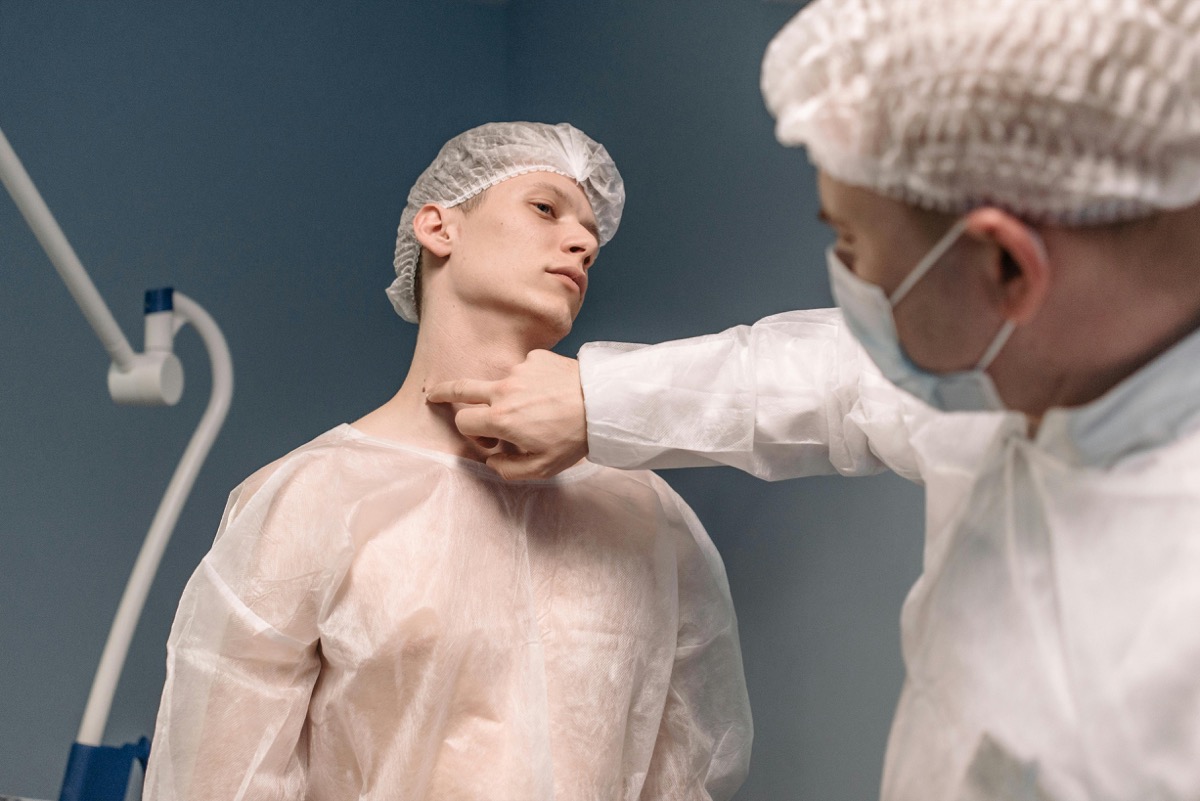
Dr. Parikh examines your neck to assess the nodule clinically — its size, mobility, tenderness, and relationship to other structures. He also assesses your voice and airway.
What to Bring to Your First Appointment
The more information Dr. Parikh has about your nodule's history, the more useful your consultation will be.
- Thyroid ultrasound reports — all available, ideally most recent and one from 6–12 months prior to show any growth
- FNA biopsy pathology reports — with Bethesda category if available
- Thyroid lab results — TSH, free T4 (within the past 6–12 months)
- Medication list — including any blood thinners or heart medications
- Prior imaging studies — CT scans or other imaging that includes the neck
- A list of your symptoms — when they started, how severe, whether they are worsening
- Your goals — what you're hoping to achieve (symptom relief, cosmetic improvement, avoiding surgery, etc.)
Don't Have Everything?
Don't let incomplete records delay your consultation. Bring what you have. Dr. Parikh can order a new ultrasound at your visit if needed, and our team can assist with obtaining records from your referring physician.
What Happens at Your Consultation
-
1
History & Records Review
Dr. Parikh reviews your medical history, symptoms, and all available records — biopsy results, ultrasound reports, and lab work. He asks about your goals and concerns.
-
2
Physical Examination
He examines your neck and assesses the nodule clinically. Your voice and airway are evaluated.
-
3
Ultrasound Review (or New Scan)
If you bring recent imaging, Dr. Parikh reviews it carefully. If a current ultrasound is needed, one can be performed at your visit.
-
4
Honest Recommendation
Based on everything he has reviewed, Dr. Parikh tells you his recommendation: RFA, surgery, watchful waiting, or additional workup. He explains his reasoning and answers all your questions.
-
5
Scheduling (If RFA Is Right for You)
If you are a candidate and decide to proceed, the procedure is scheduled at our Atlanta office. Pre-procedure instructions and pricing information are provided.

Candidacy Questions We Hear Often
Two prior benign biopsies are preferred, but one prior benign biopsy may be sufficient in the right clinical context. Dr. Parikh will evaluate your specific situation. In some cases, a second FNA biopsy may be recommended before proceeding with RFA.
Indeterminate biopsy results (Bethesda III or IV) typically require further evaluation before RFA can be considered. This may include molecular testing (ThyroSeq, Afirma), repeat biopsy, or surgical evaluation. Dr. Parikh will review your pathology and guide you on the appropriate next step.
In some cases, yes. Multiple nodules can be treated in a single session, depending on their size, location, and complexity. Dr. Parikh will discuss this based on your specific anatomy and nodule characteristics.
Yes. Many of Dr. Parikh's patients travel from across the country to be treated at our Atlanta office. We have a streamlined process for out-of-town patients, and many complete consultation and procedure in one or two visits. See our out-of-town patient guide →
Find Out If You're a Candidate — Call or Schedule Today
The only way to know for certain is a consultation with Dr. Parikh. Bring your records and he'll give you a clear, honest answer at your first visit.